by Abhishek Katakwar
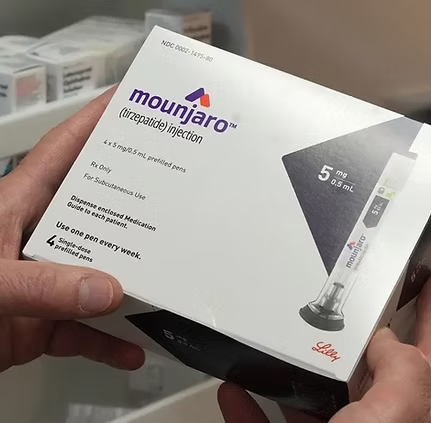
If you're on semaglutide (Ozempic/Wegovy) or tirzepatide (Mounjaro/Zepbound) and planning to stop, here's what you must do to avoid weight regain — evidence-based guidance from Dr. Abhishek Katakwar, Bariatric & Metabolic Surgeon, AIG Hospitals Hyderabad.
Expert Weight Management Guidance
Don't rely on medications indefinitely. A personalised consultation can help you find the right path — whether medical, surgical, or lifestyle-based.
📲 Book a Consultation on WhatsApp
🌐 Website 📸 Instagram ▶️ YouTube 👍 Facebook 💼 LinkedIn ⭐ Google
Coming off semaglutide or tirzepatide carries real risks of weight regain. Learn the evidence-based strategies to protect your results — safely.
Semaglutide (Ozempic / Wegovy)
Tirzepatide (Mounjaro / Zepbound)
The Reality
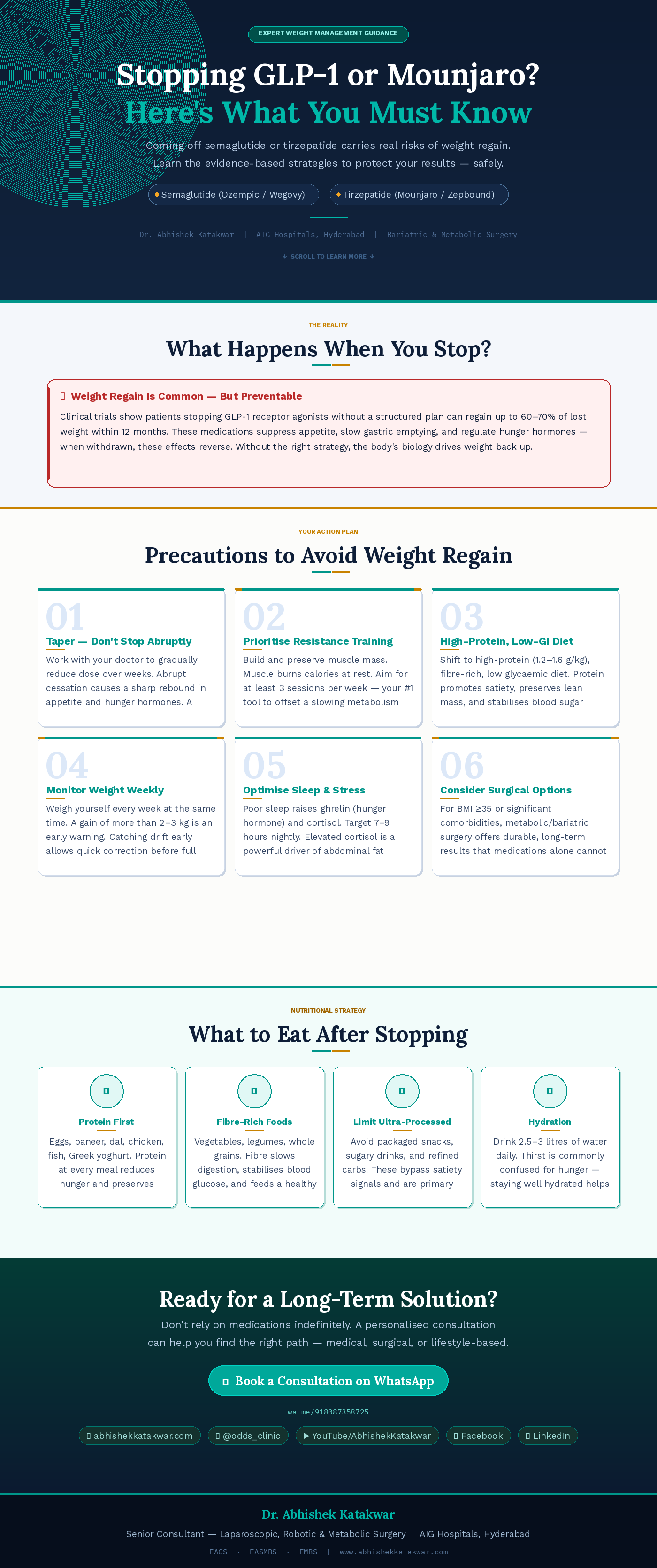
Clinical trials show that patients who stop GLP-1 receptor agonists without a structured plan can regain up to 60–70% of lost weight within 12 months. These medications suppress appetite, slow gastric emptying, and regulate hunger hormones — when withdrawn, these effects reverse. Without the right strategy, the body's biology drives weight back up. The key is knowing what to do before, during, and after stopping.
Your Action Plan
01 Taper — Don't Stop Abruptly
Work with your doctor to gradually reduce your dose over weeks. Abrupt cessation causes a sharp rebound in appetite and hunger hormones. A structured taper softens this transition.
02 Prioritise Resistance Training
Build and preserve muscle mass. Muscle is metabolically active — it burns calories at rest. Aim for at least 3 sessions per week. This is your #1 tool to offset a slowing metabolism.
03 High-Protein, Low-GI Diet
Shift to a high-protein (1.2–1.6 g/kg body weight), fibre-rich, low glycaemic diet. Protein promotes satiety, preserves lean mass, and stabilises blood sugar without the drug's help.
04 Monitor Weight Weekly
Weigh yourself every week at the same time. A gain of more than 2–3 kg is an early warning sign. Catching drift early allows quick correction before it becomes a full regain.
05 Optimise Sleep & Stress
Poor sleep raises ghrelin (hunger hormone) and cortisol. Target 7–9 hours of quality sleep. Manage stress actively — elevated cortisol is a powerful driver of abdominal fat storage.
06 Consider Surgical Options
For patients with BMI ≥35 or significant comorbidities, metabolic/bariatric surgery offers durable, long-term results that medications alone cannot match. Consult a specialist.
Nutritional Strategy
🥚 Protein First
Eggs, paneer, dal, chicken, fish, Greek yoghurt. Protein at every meal reduces hunger and preserves muscle.
🥑 Fibre-Rich Foods
Vegetables, legumes, whole grains. Fibre slows digestion, stabilises glucose, and feeds a healthy gut microbiome.
🚫 Limit Ultra-Processed Foods
Avoid packaged snacks, sugary drinks, and refined carbs that bypass satiety signals and drive overeating.
💧Hydration
Drink 2.5–3 litres of water daily. Thirst is often confused for hunger — staying hydrated helps manage appetite.
Don't rely on medications indefinitely. A personalised consultation can help you find the right path — whether medical, surgical, or lifestyle-based.
📲 Book a Consultation on WhatsApp
🌐 Website 📸 Instagram ▶️ YouTube 👍 Facebook 💼 LinkedIn ⭐ Google
Dr. Abhishek Katakwar
Senior Consultant — Laparoscopic, Robotic & Metabolic Surgery | AIG Hospitals, Hyderabad
FACS · FASMBS · FMBS | www.abhishekkatakwar.com

Address : Cluster K, AIG Hospitals, Beside Ramky Towers, 1, Mindspace Rd, Hyderabad, Telangana 500032
abhishekkatakwar@gmail.com Phone : +91-8087358725 Phone : +91-9177358725© 2026 Dr. Abhishek Katakwar. All Rights Reserved.